Mon
1
Choose date & time
›General


CRM


Admin


Calendar
 Anna Lewis
Mon
1
Tue
2
Wed
3
Thu
4
Fri
5
Sat
6
Sun
7
Mon
8
Tue
9
Wed
10
Thu
11
Fri
12
Sat
13
Sun
14
Mon
15
7
8
9
10
Break
Break
Break
Break
Cosmetologist consultation
Iris Parker
Status
New bookingPrice
€30
7:00 - 8:00
Nail strengthening
Victoria Lane
Status
New bookingIncome
€12
7:00 - 8:00
Facial cleansing
CancelledPrice
€20
8:00 - 8:30
RF face lifting
Anna Lawson
Status
New bookingIncome
€80
8:30 - 10:00
Lip contouring
Sophia Mills
Status
Repeat bookingIncome
€160
8:00 - 9:30
Cosmetologist consultation
Alina Summers
Status
ConfirmedIncome
€35
9:00 - 10:00
Biorevitalization
ConfirmedIncome
€420
11:00 - 12:30
RF face lifting
Iris Parker
Status
New bookingIncome
€70
13:00 - 14:00
Visible hours


Emma Johnson
PersonalHair extension specialist
Helping create natural volume and length without compromise.
174 clicks


Link grid


Employee schedule
Set up working days and hours for this employee.

Amelia
Dentist • 40 hours / week
Working hours
Breaks
Time off
Weekly schedule
Monday
10:00
18:00
Tuesday
10:00
18:00
Wednesday
10:00
18:00
Thursday
10:00
18:00
Friday
10:00
18:00
Saturday
Day off
Sunday
Day off
Weekly total
40 h
Break
Monday - Friday
1 hour
13:00 – 14:00
Cleaning
Monday - Friday
30 minutes
18:00 – 18:30
Breaks are automatically blocked in the calendar. Clients can't book time during breaks.
Leave balance
Total
24
days
Used
7
days
Remaining
17
days
Pending
1
request
Annual leave
Mar 24 — Mar 28, 2026
Approved
5 days
Sick leave
Feb 10 — Feb 11, 2026
Approved
2 days
Personal day
Apr 15, 2026
Pending
1 day
Apply to all working days
Monday through Friday will share the same schedule.
Cancel
Save
Psychologist consultation
€60
Booking payment
Psychologist consultation
€60


Pay €60
Service performance




€4,290
total revenue
Lip contouring
RF lifting
Facial cleansing
Other
Services
Bookings
Revenue
Lip contouring
14
€1,590
RF lifting
18
€1,350
Facial cleansing
24
€840

Consultation
17
€510
New clients
+24
+16%
New booking
A client booked a service through the widget
SMS
Your booking is confirmed!
10:30
Reminder
A friendly reminder about your appointment tomorrow at 15:00. Have a great day!
15:00
After visit
Thank you for your visit! Please take a moment to leave a review🙏
18:30
SMS
Pending
Reminder
Pending
Review
Pending

How to create a Link-in-Bio page for creators in 2026
How to create a Link-in-Bio page for creators in 2026
How to create a Link-in-Bio page for creators in 2026
How to create a Link-in-Bio page for creators in 2026
Need help?
Find the answer in the help center or write to us.
The owner picks the groom for their breed and the size of the dog, and is only offered the windows it genuinely fits. The name, the temperament and what the animal is frightened of stay on its card, so the groomer knows before the day starts.
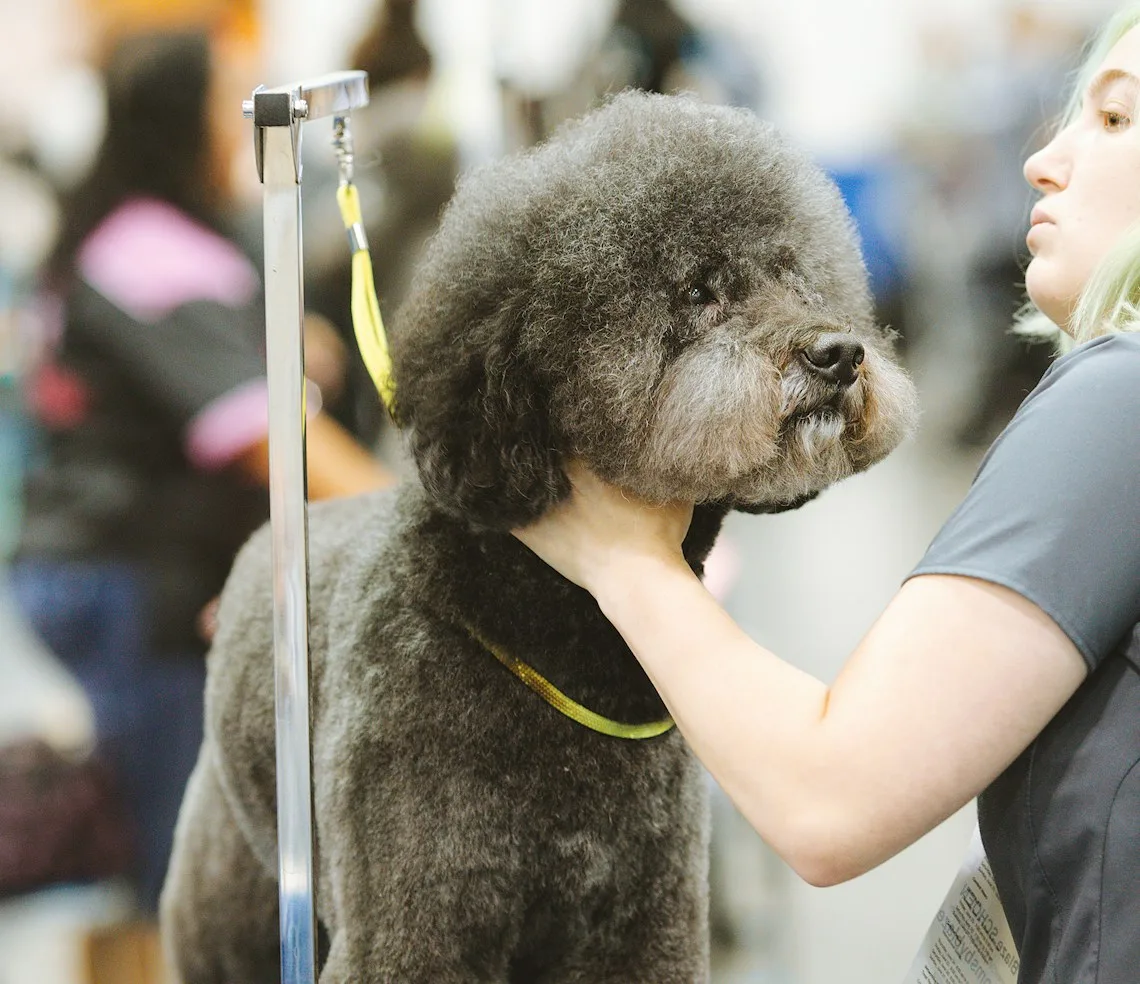
 Everything a grooming studio runs on
Booking, the tables in the schedule, the animal’s card and the reminder about the next groom in one service. The groomer works with the animal rather than the phone and the notebook.

The booking page
The owner picks the groom for their breed and size, sees how long it takes and what it costs, and books it without a thread of DMs.

The diary and the tables
The table and the bath are added to the schedule as specialists of their own: two animals cannot be booked onto one, and the time to clean down stays between them.

The animal’s card
Name, breed, previous grooms and your notes: what frightens it, which clipper it tolerates, how it behaves on the table.

A form before the visit
Ask about the state of the coat, matting, vaccination and behaviour: the form lives on a page of its own and the answers gather in Forms rather than on the doorstep.

The next groom
The same dog comes back in about six weeks. Book the next visit right after this one, and the reminder goes out the day before.

Workload and revenue
See which grooms are booked most often, how many there were this month, and how the revenue splits between services and groomers.
 Quick start
The page, the list of grooms and the schedule take an evening to organise. No separate website needed.


Create the studio page
Add the name, the address, contacts and photos of your work. The page opens from a link, with no separate website.

List the grooms by breed and size
A tidy-up, a full groom, hand stripping, de-shedding: each with its own length and price. One service called "dog groom" does not hold here.

Set the hours and the tables
Open your working hours, add tables and baths as specialists of their own, and leave a gap between animals to clean down.

Share the link
Put it in the Instagram bio, the Google profile and on the studio card, and bookings appear in your calendar at once.
 What changes in the studio
Bookly takes on the back-and-forth, the intake form and the reminders, so your hands stay on the animal.
 The breed sets the length
A neglected spaniel in matts and a poodle kept in trim are different work and different hours, though both bookings are called "a dog groom". When every groom is listed on its own, with its own length and price, the owner is only offered windows the animal genuinely fits, and nobody reshuffles the day by hand.
 A service of its own for each breed and size
Its own length and price on every groom
A gap between animals to clean the table down
A service of its own for each breed and size
Its own length and price on every groom
A gap between animals to clean the table down
 A quiet hour
A dog that panics at the dryer or snaps at the clipper needs a calm hour and more of it than a routine groom. The form before the visit asks about behaviour, the state of the coat and vaccination, and the answers gather in Forms, so whoever builds the day knows it in advance, not five minutes before the car pulls up.
A form on behaviour, coat and vaccination
Hours kept aside for the difficult ones
A confirmation and a reminder for the owner
Six weeks
A groom holds for about six weeks, and that is when the owner decides where to go. The reminder about the next visit goes out the day before, and the booking confirmation and the visit reminder sit ready in the studio’s message templates.
A reminder to the owner the day before
Templates for the confirmation and the reminder
The next groom booked before the owner leaves
 The result in numbers
A tidy-up on a yorkie holds an hour, brushing the matts out of a spaniel holds two and a half, and the owner is only offered the windows their animal fits. A gap stays between bookings to clean the table down, so the next dog is not waiting in the corridor.
Try for free

24/7
Owners book in the evening, once the studio has closed

6 weeks
And the same dog is due back again

3 min
To add a groom with its length, price and gap

30+
Integrations, calendar and Telegram among them
Ask it here. The answer appears under your question and lands in your inbox, and stays on the page for the next person looking for the same thing.
Ellie
Holly

Bookly team
Awaiting an answer
Because the phrase covers very different work: a yorkie and a newfoundland, a well-kept coat and a matted one. In Bookly each groom is listed on its own, with its own length and price, so the owner sees what their case costs and how long it takes before they book.
The form before the visit asks about the state of the coat, so most of the time you see it coming and can offer a longer service, de-matting listed separately, for instance. If it turns out worse once the dog is on the table, the booking in the calendar can be extended or the next one moved.
Yes. Your notes stay on the animal’s card: what frightens it, which clipper it tolerates, how it behaves on the table. They are in front of you before the visit, so an animal like that can be given a calmer hour from the start.
A reminder goes out before a booking. Book the next groom right after the visit and the owner gets the reminder the day before, six weeks on. The history also shows when the animal was last in, so you can write to the ones who have not been back.
No, Bookly does not store medical documents. You can ask the vaccination question in the form before the visit, the answer gathers in Forms, and you can leave a short note on the card. The passport itself stays with the owner.
Yes. A table, a bath or a crate is added as a specialist of its own with a schedule of its own: while it is taken, that time cannot be booked. Free hours are counted for each of them separately, so the table and the groomer stand in the calendar as two columns.
Bookly takes no payment on the booking page. You take the deposit your own way and enter it as an operation of its own in finances, while the method on the booking itself is marked in the booking panel: cash, card or terminal.
Bookly is not only for grooming studios. Pick your own line of work: the same tools are there, arranged around different days.


(4.9/5)
500+ businesses already run on Bookly
Fewer Lost Leads.
More
Loyal Clients.
Attract clients, take bookings, automate communication, and track results — no complicated setup.

Bookly is a Ukrainian online booking and CRM service for groomers and grooming studios: owners pick the groom for their dog’s breed and size, and what the animal is frightened of and its history of grooms stay on its card.
In grooming the owner pays and the animal is the one on the table, so every arrangement is made for two at once. While the groomer holds a dog with one hand, the other is not free for the phone, and the messages wait until the evening, by which time some owners have booked elsewhere. A booking page moves the arranging to their side: the grooms, their length, their price and the free hours are all on it, and the booking lands in your calendar straight away.
The hard part is not filling the day but judging how long each animal will take. A neglected spaniel in matts and a poodle kept in trim are not the same two hours, though both bookings are called "a dog groom". That is why one price for "a dog" is a promise nobody can keep: each groom is listed on its own, with the length and the price that suit the breed and the size, and a gap stays between bookings for cleaning the table down.
Then there are the animals you cannot put in the flow. A dog that panics at the dryer or snaps at the clipper needs a quiet hour and more of it, and whoever takes the booking has to know that before the day is built, not once the owner is at the door. A short form before the visit asks about behaviour, the state of the coat and vaccination, and the answers gather in Forms, so the difficult ones land in the calmer hours from the start.
What an animal is frightened of, which clipper it will not tolerate and how it behaved last time belongs on its card rather than in the groomer’s memory, all the more when the studio has more than one table. The card in Bookly holds the owner’s contacts, the history of grooms and your notes; it is not a medical record and keeps no pet passport. After that the rhythm does the work: a groom holds for about six weeks, and the same dog is due again. Book the next visit before the owner has left, because that reminder does more for returns than any advertising.
















Bookly team