Mon
1
Choose date & time
›General


CRM


Admin


Calendar
 Anna Lewis
Mon
1
Tue
2
Wed
3
Thu
4
Fri
5
Sat
6
Sun
7
Mon
8
Tue
9
Wed
10
Thu
11
Fri
12
Sat
13
Sun
14
Mon
15
7
8
9
10
Break
Break
Break
Break
Cosmetologist consultation
Iris Parker
Status
New bookingPrice
€30
7:00 - 8:00
Nail strengthening
Victoria Lane
Status
New bookingIncome
€12
7:00 - 8:00
Facial cleansing
CancelledPrice
€20
8:00 - 8:30
RF face lifting
Anna Lawson
Status
New bookingIncome
€80
8:30 - 10:00
Lip contouring
Sophia Mills
Status
Repeat bookingIncome
€160
8:00 - 9:30
Cosmetologist consultation
Alina Summers
Status
ConfirmedIncome
€35
9:00 - 10:00
Biorevitalization
ConfirmedIncome
€420
11:00 - 12:30
RF face lifting
Iris Parker
Status
New bookingIncome
€70
13:00 - 14:00
Visible hours


Emma Johnson
PersonalHair extension specialist
Helping create natural volume and length without compromise.
174 clicks


Link grid


Employee schedule
Set up working days and hours for this employee.

Amelia
Dentist • 40 hours / week
Working hours
Breaks
Time off
Weekly schedule
Monday
10:00
18:00
Tuesday
10:00
18:00
Wednesday
10:00
18:00
Thursday
10:00
18:00
Friday
10:00
18:00
Saturday
Day off
Sunday
Day off
Weekly total
40 h
Break
Monday - Friday
1 hour
13:00 – 14:00
Cleaning
Monday - Friday
30 minutes
18:00 – 18:30
Breaks are automatically blocked in the calendar. Clients can't book time during breaks.
Leave balance
Total
24
days
Used
7
days
Remaining
17
days
Pending
1
request
Annual leave
Mar 24 — Mar 28, 2026
Approved
5 days
Sick leave
Feb 10 — Feb 11, 2026
Approved
2 days
Personal day
Apr 15, 2026
Pending
1 day
Apply to all working days
Monday through Friday will share the same schedule.
Cancel
Save

Psychologist consultation
€60
Booking payment
Psychologist consultation
€60


Pay €60
Service performance




€4,290
total revenue
Lip contouring
RF lifting
Facial cleansing
Other
Services
Bookings
Revenue

Lip contouring
14
€1,590

RF lifting
18
€1,350

Facial cleansing
24
€840

Consultation
17
€510
New clients
+24
+16%
New booking
A client booked a service through the widget
SMS
Your booking is confirmed!
10:30
Reminder
A friendly reminder about your appointment tomorrow at 15:00. Have a great day!
15:00
After visit
Thank you for your visit! Please take a moment to leave a review🙏
18:30
SMS
Pending
Reminder
Pending
Review
Pending

How to create a Link-in-Bio page for creators in 2026
How to create a Link-in-Bio page for creators in 2026
How to create a Link-in-Bio page for creators in 2026
How to create a Link-in-Bio page for creators in 2026
Need help?
Find the answer in the help center or write to us.
Put your formats, prices and free hours behind one link, and the person who has just finished watching your video books a discovery call themselves. Programme sessions, the cohort’s group calls, the client’s request and your notes all stay in the Bookly CRM.
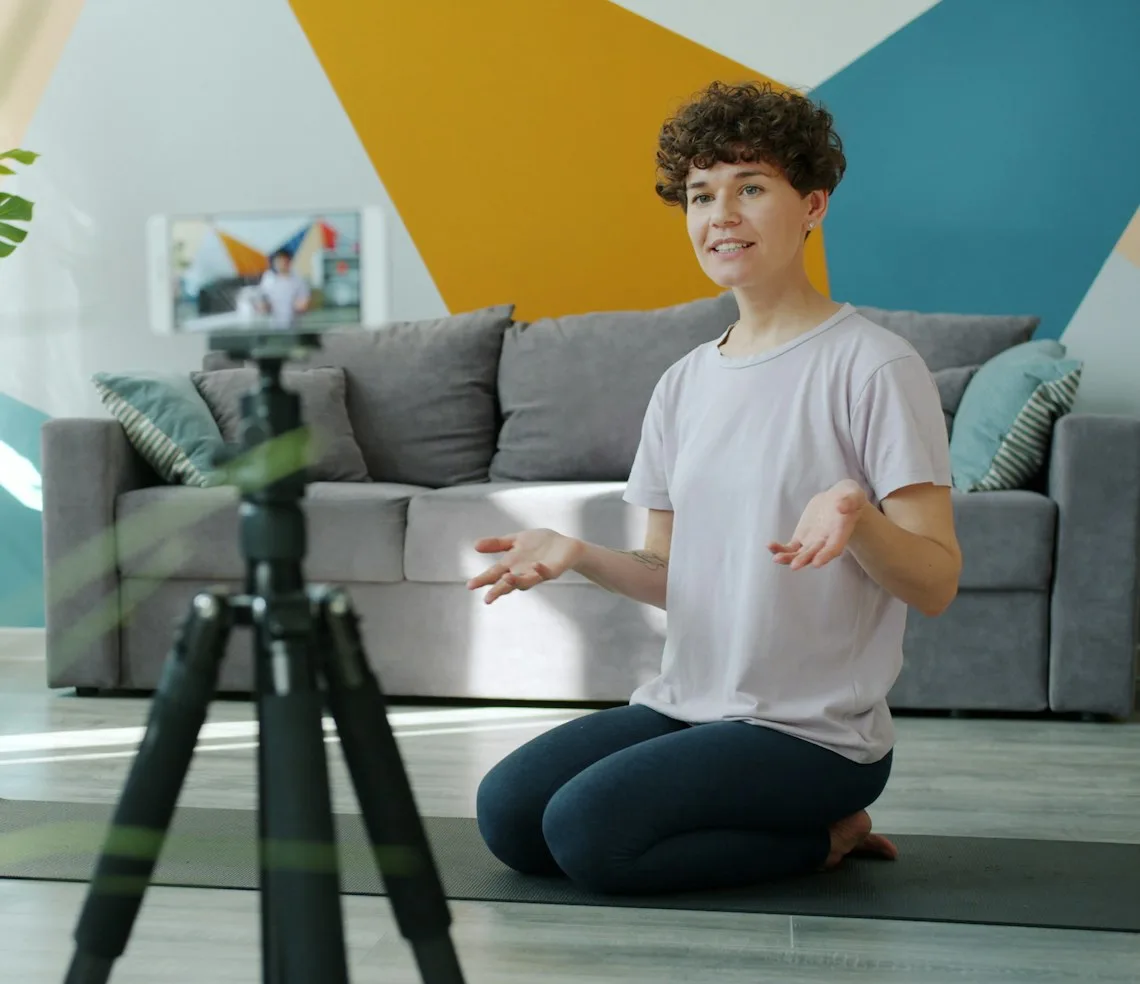
 What the practice gets
Bookly takes on the booking, the form with the client’s request, the reminders and the history of everyone you work with, so your hours go on sessions instead of agreeing times in the DMs.
 Booking after the video
The decision to try coaching ripens late in the evening, after a video, a live or a webinar, and it does not keep. If the only way forward is a DM and a wait until tomorrow, some of those people never arrive. The page shows the formats, the length and the price, so the call is booked on the spot, with nothing to write.
 Discovery call, one-off session and programme as separate formats
Booking open late in the evening and at weekends
One link for your bio, your webinar and your newsletter
Discovery call, one-off session and programme as separate formats
Booking open late in the evening and at weekends
One link for your bio, your webinar and your newsletter
 A programme without arranging
A programme is not one meeting but eight or ten: the same hour every week, the odd reschedule, and the cohort’s group calls in between, sitting in the same calendar. Every format carries its own length, so a twenty-minute discovery call and an hour of deep work do not get muddled, and a reminder the day before saves the paid hours that used to burn because someone forgot.
A length and a price of its own for every format
The group call takes its own hour in the same week
A reminder the day before and again before the session
The client’s thread
Coaching hangs on a thread: what they came with, what you agreed last time, what moved and what did not. When that lives in a notebook and three chats, every session starts with rebuilding the picture. In the client card the request, the history of sessions and your notes sit together, so you can see who is ready for the next package or a seat on the coming cohort.
The client’s request and your notes after every session
History of meetings and the formats they took
Booking the next session in a few clicks
 Everything a coaching practice runs on
A booking page, a calendar of sessions and group calls, client cards with the request and your notes, a form before the first meeting and the cohort’s materials, all in one service instead of a scheduler, a spreadsheet and three chats.

A booking page and the link in your bio
One link that holds the course, the discovery call and one-to-one work side by side. People open it from your profile or an email, choose a format and book a time.

Sessions and group calls in one calendar
One-to-one meetings, the cohort’s group calls and the hours still open, all in one week. Every format has its own length, so a twenty-minute call does not eat a whole hour.

The client card
The request they came with, the history of meetings, your notes after each session and which of the ten comes next.

A form with the request
What is going on now, what they have already tried, where they want to be in three months. The answers collect in a form on the page, so the first call does not start with questions.

Cohort materials
Workbooks, printed practices and card decks you send to participants. You can see what is left before you open the next cohort.

Income analytics
How many discovery calls you ran this month, which formats get booked most often and how much income each of them brings.
 A quick start
Setting it up takes an evening: the page, the formats, your hours, and a link that stays in your bio until the next launch.


Build your page
Add your name, what you work with, a few words about your approach and a link to the course next to the booking.

Describe your formats
Discovery call, one-off session, programme session, group call: the length and the price of each.

Open your hours
Set the hours when you hold sessions and leave a gap between them, so Bookly will only ever show time that is genuinely free.

Put the link in your bio
Add it to your profile, your webinar and your newsletter. Bookings appear in your calendar straight away.
 The result in numbers
The client picks a format, sees what it costs on the page and books a time. You mark the money on the booking itself once it is in hand, and anything sent in advance goes into Finance as an operation, so Operations shows which sessions are already paid for.
Try for free

24/7
Clients book a session at any hour

3 min
To add a new format with its price

100%
Of reminders go out automatically

30+
Integrations, calendar and Telegram among them


(4.9/5)
500+ businesses already run on Bookly
Fewer Lost Leads.
More
Loyal Clients.
Attract clients, take bookings, automate communication, and track results — no complicated setup.

Ask it here. The answer appears under your question and lands in your inbox, and stays on the page for the next person looking for the same thing.
Emma
Awaiting an answer
Yes. Every format is set up separately: the discovery call has its own length and its own price, zero if that is how you work, and a programme session has its own. The client picks the format right on the page.
Yes. You decide how the session is held, and you send the meeting link the way you already do: Bookly does not create one.
Bookly has no separate packages module. You put the meetings in the calendar ahead of time, and the client card shows how many sessions have already happened, so you know which of the ten you are on and when to talk about carrying on.
Yes. You put the group call in the calendar as a booking of its own on the hour you need: that time is taken, and a one-to-one session is never offered against it. Bookly does not count seats, so the list of people on the cohort stays wherever you keep it now.
Yes. A short form sits on the page next to booking: what brings you here, what you have already tried, what you want to get to. The answers collect in it and you read them before the session rather than during it.
A reminder goes out automatically the day before and again before the session. If that is not enough, charge a token amount for the discovery call: the person sends it in advance and you add a Deposit operation in Finance, so Operations shows who genuinely means to come.
Yes. Create an account and build your booking page with no card and no commitment.
Bookly is not only for coaches and course creators. Pick your own line of work: the same tools are there, arranged around different days.
Bookly is a Ukrainian online booking and CRM service for coaches and course creators: people book a discovery call from your page themselves, programme sessions and the cohort’s group calls share one calendar, and each client’s request and your notes stay on their card.
A coaching client does not appear when you happen to be free. Someone finishes your video or your live at half past ten at night, decides it is worth a try, and sends a DM. The reply comes the next day between two sessions, then the hours have to be agreed, and somewhere around the third message the decision has gone cold. A booking page takes that exchange off you: the formats, the length, the price and the free hours are all on it, so the discovery call is booked when the person is ready, not when you get back to your phone.
Then comes the part it was all for, the programme. Coaching rarely ends with a single meeting: eight or ten weekly sessions, the odd reschedule, and for a course author the cohort’s group calls in between. Every format carries its own length and price, so a twenty-minute call and an hour of deep work never collide in the week, and a reminder the day before saves the paid hours that used to burn because a meeting was forgotten.
The first session decides whether there will be a second, and it starts with the request. A short form on the page collects what the person is bringing, what they have already tried and where they want to get to, so you read it before you meet instead of spending the first twenty minutes asking. After that the client card keeps the history of meetings and your notes on each one: what you agreed, what moved, where they got stuck. At session ten the context comes back in seconds rather than out of a notebook and three chats.
The page itself works as one link for your bio, a webinar, a podcast or a newsletter: the course, the discovery call and one-to-one work can sit next to each other, and before a launch you update all of it in one place. The analytics show how many discovery calls you ran, which formats people book most and how much income each of them brings, which is how you notice that the practice has outgrown the schedule you are keeping.























Bookly team