Mon
1
Choose date & time
›General


CRM


Admin


Calendar
 Anna Lewis
Mon
1
Tue
2
Wed
3
Thu
4
Fri
5
Sat
6
Sun
7
Mon
8
Tue
9
Wed
10
Thu
11
Fri
12
Sat
13
Sun
14
Mon
15
7
8
9
10
Break
Break
Break
Break
Cosmetologist consultation
Iris Parker
Status
New bookingPrice
€30
7:00 - 8:00
Nail strengthening
Victoria Lane
Status
New bookingIncome
€12
7:00 - 8:00
Facial cleansing
CancelledPrice
€20
8:00 - 8:30
RF face lifting
Anna Lawson
Status
New bookingIncome
€80
8:30 - 10:00
Lip contouring
Sophia Mills
Status
Repeat bookingIncome
€160
8:00 - 9:30
Cosmetologist consultation
Alina Summers
Status
ConfirmedIncome
€35
9:00 - 10:00
Biorevitalization
ConfirmedIncome
€420
11:00 - 12:30
RF face lifting
Iris Parker
Status
New bookingIncome
€70
13:00 - 14:00
Visible hours


Emma Johnson
PersonalHair extension specialist
Helping create natural volume and length without compromise.
174 clicks


Link grid


Employee schedule
Set up working days and hours for this employee.

Amelia
Dentist • 40 hours / week
Working hours
Breaks
Time off
Weekly schedule
Monday
10:00
18:00
Tuesday
10:00
18:00
Wednesday
10:00
18:00
Thursday
10:00
18:00
Friday
10:00
18:00
Saturday
Day off
Sunday
Day off
Weekly total
40 h
Break
Monday - Friday
1 hour
13:00 – 14:00
Cleaning
Monday - Friday
30 minutes
18:00 – 18:30
Breaks are automatically blocked in the calendar. Clients can't book time during breaks.
Leave balance
Total
24
days
Used
7
days
Remaining
17
days
Pending
1
request
Annual leave
Mar 24 — Mar 28, 2026
Approved
5 days
Sick leave
Feb 10 — Feb 11, 2026
Approved
2 days
Personal day
Apr 15, 2026
Pending
1 day
Apply to all working days
Monday through Friday will share the same schedule.
Cancel
Save

Psychologist consultation
€60
Booking payment
Psychologist consultation
€60


Pay €60
Service performance




€4,290
total revenue
Lip contouring
RF lifting
Facial cleansing
Other
Services
Bookings
Revenue

Lip contouring
14
€1,590

RF lifting
18
€1,350

Facial cleansing
24
€840

Consultation
17
€510
New clients
+24
+16%
New booking
A client booked a service through the widget
SMS
Your booking is confirmed!
10:30
Reminder
A friendly reminder about your appointment tomorrow at 15:00. Have a great day!
15:00
After visit
Thank you for your visit! Please take a moment to leave a review🙏
18:30
SMS
Pending
Reminder
Pending
Review
Pending

How to create a Link-in-Bio page for creators in 2026
How to create a Link-in-Bio page for creators in 2026
How to create a Link-in-Bio page for creators in 2026
How to create a Link-in-Bio page for creators in 2026
Need help?
Find the answer in the help center or write to us.
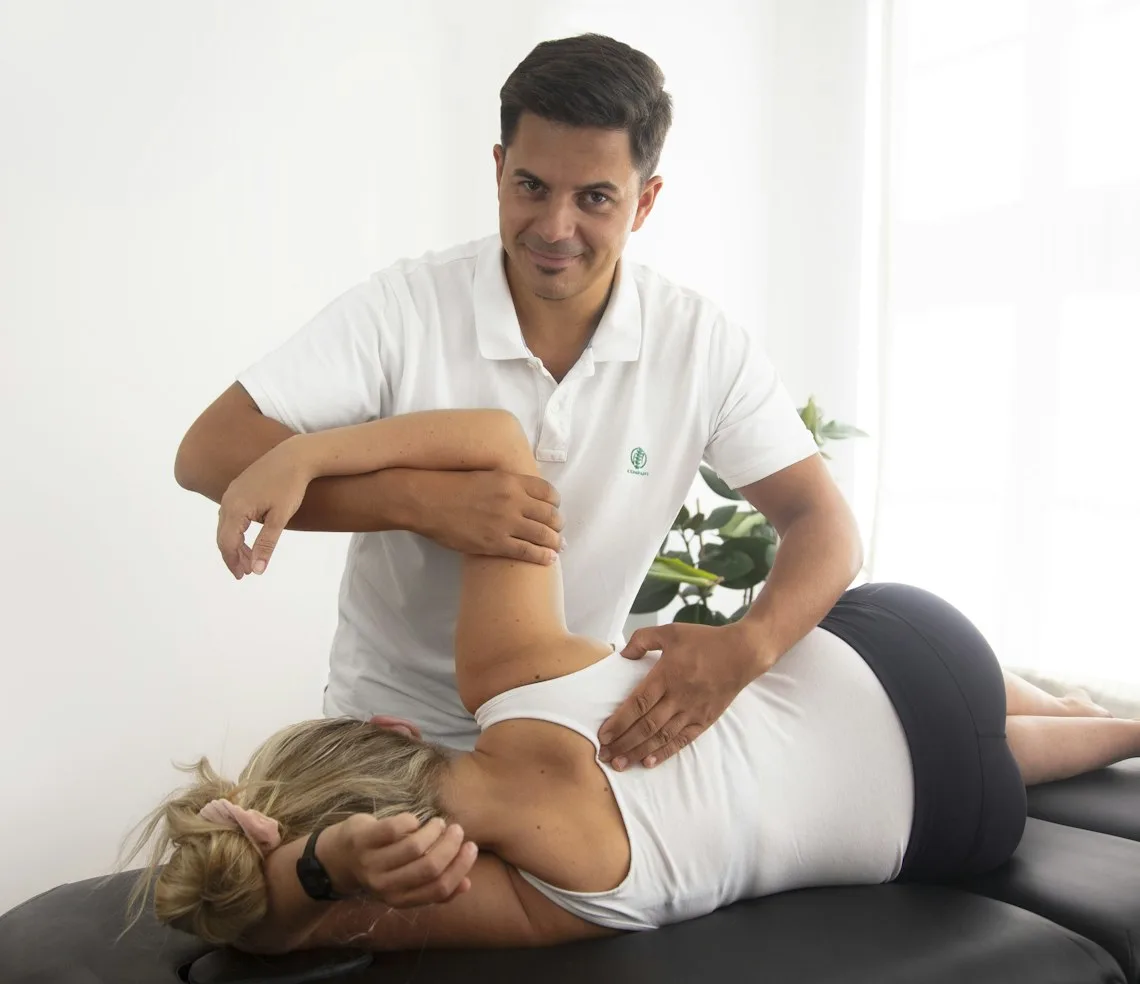
Patients pick a free hour on your page while your hands are busy. The sessions of a course go into the diary ahead, a short form arrives before the first appointment, and the record of visits and your notes stay with you alone.
 Everything an appointment booking needs
The page answers the questions about length, price and free hours for you, and it answers them while you are standing at the couch.

Booking in two steps
The patient picks a first appointment or the next session of a course, sees the free hours and confirms, with no call and no waiting for your hands to be free.

Only your hours
The calendar opens the hours you actually work. House calls, training and the gap between patients are never offered for booking.

A form instead of questions
What hurts, how long for, past injuries or surgery, whether there are recent scans: the patient writes it down before the visit. You word the questions, and only you read the answers.

A page that opens on a phone
Someone whose back went in the evening books from their phone in a minute: the page opens the same way on any screen.

 What changes in the room
Bookly takes on agreeing the time, the reminders and the record of visits, so your hour goes to the work you do with your hands rather than to the phone and a paper diary.
 Booking without a call
The phone rings exactly when your hands are on someone’s back: you cannot answer, and by the time you call back in the evening the person has booked somewhere else, because pain does not wait until tomorrow. The page shows the types of appointment, their length, the price and the hours that are genuinely free, so the booking appears on its own, with no call at all.
 A page with your appointment types and prices
Booking open during a session and at night
One link for your profile, map listing and referrals
A page with your appointment types and prices
Booking open during a session and at night
One link for your profile, map listing and referrals
 A course, not one visit
The work rarely ends with the first appointment: a run of sessions follows, two or three days apart, and it is the interval that holds the whole course together. The visits go into the diary weeks ahead, at the same convenient hour, and a reminder the day before cuts the sessions people remember too late.
The sessions of a course in the diary weeks ahead
Its own length and price for an appointment and a session
A gap between patients built into the diary
The record of visits
Someone comes back a year later with the same neck and asks what you did last time. The card keeps the dates of the visits, the type of appointment, the form filled in before the first session and your notes. It is your workspace, not a medical record: what goes into it is your decision.
The history of every patient’s visits and sessions
Notes only you can read
Booking again without retaking the contact details
Setting it up takes an evening: the appointment types with their lengths, your hours, and a link to send in reply to “how do I book with you?”.
Describe the appointment types
A first appointment with an examination, a session from a course, a check-up visit: each with its own length and price.


Set your hours
Open only the hours you actually work, and leave a gap between patients, for notes and for setting the couch.
Share the link
Put it in your profile, on your map listing and in replies to the people who recommend you, and bookings arrive in your calendar.
 The result in numbers
Sessions are set ahead at the interval the work needs, and the card keeps which areas were worked on last time. A gap in the course stops being an accident.
Try for free

24/7
Patients book while your hands are busy

3 min
To describe a first appointment and a session

100%
Of reminders before a visit go out automatically

30+
Integrations, calendar and Telegram among them


(4.9/5)
500+ businesses already run on Bookly
Fewer Lost Leads.
More
Loyal Clients.
Attract clients, take bookings, automate communication, and track results — no complicated setup.

Ask it here. The answer appears under your question and lands in your inbox, and stays on the page for the next person looking for the same thing.
Be the first: ask about bookings, schedules, payments or anything else standing between you and getting started.
Awaiting an answer
Yes. Bookly has no repeating bookings, so you put the sessions into the diary ahead one by one, on the days and hours you need. The interval between them holds, and a reminder goes out before each visit.
Only you. Forms, bookings and notes stay in your workspace, and access to it belongs to the people you have given it to. The answers are never shown on the public booking page.
No. Bookly keeps the booking, the diary, contacts, the history of visits and your working notes. Diagnoses, protocols and clinical conclusions stay where you keep them.
Every appointment type has its own length and price: a 60-minute examination and a 30-minute session take exactly as much of the diary as they last, and the patient is offered the hours that fit the one they chose.
Bookly takes no payments online, but you enter the deposit a patient sends in Finance as a Deposit operation, and then the diary holds a confirmed visit rather than an intention to drop by. It is not required: the reminder the day before works without one.
No. One page, a few appointment types and your hours with a gap between patients are enough. A team, a second room and a stock of materials only switch on when you actually have them.
Yes. Create an account and set booking up with no card and no commitment.
Bookly is not only for manual therapy. Pick your own line of work: the same tools are there, arranged around different days.
Bookly is a Ukrainian online booking and CRM service for manual therapists: patients book while you work, the sessions of a course go into the diary ahead, and only you and the people you give access to see your notes.
A manual therapist’s day is arranged so that the phone rings precisely when answering it is impossible: your hands are on a patient’s back and there are twenty minutes of the session left. You call back in the evening and hear that the person has already booked somewhere else, because pain does not wait until tomorrow. A booking page takes those calls off you: it shows the types of appointment, their length, the price and the hours that are genuinely free, so the patient picks a time themselves, even at two in the morning.
The second half of the work is the course. The first appointment with an examination runs longer, then a run of sessions follows two or three days apart, and it is that interval which holds the course together. You put the visits into the diary one by one, weeks ahead, at the same hour that suits the patient. Each type of appointment carries its own length, so an hour-long examination and a half-hour session take exactly as much room as they last, and a gap stays between patients for notes, for setting the couch, and for a pause of your own, because this is physical work.
A short form of its own, whose link you send, collects what hurts, how long for, past injuries or surgery, whether there are recent scans, who has been seen already. You word the questions yourself and read the answers before the visit, so the first minutes of the appointment are not spent asking them. What a person writes about their body stays in your workspace: the answers never appear on the public page, and access belongs to you and to whoever you have given it to. Bookly is not a medical system in any of this: diagnoses and clinical conclusions stay where you keep them.
A manual therapy practice runs on people coming back and on word of mouth. Someone returns a year later with the same neck, and the question “what did you do last time?” should not go unanswered: the patient card holds the dates of visits, the types of appointment, the form and your notes, and booking again does not mean collecting contact details from scratch. The page itself is enough to put in your profile, on your map listing and in replies to the people who recommend you, and appointment types, prices and hours update in one place, and new bookings arrive in the same calendar you already run your week from.