Mon
1
Choose date & time
›General


CRM


Admin


Calendar
 Anna Lewis
Mon
1
Tue
2
Wed
3
Thu
4
Fri
5
Sat
6
Sun
7
Mon
8
Tue
9
Wed
10
Thu
11
Fri
12
Sat
13
Sun
14
Mon
15
7
8
9
10
Break
Break
Break
Break
Cosmetologist consultation
Iris Parker
Status
New bookingPrice
€30
7:00 - 8:00
Nail strengthening
Victoria Lane
Status
New bookingIncome
€12
7:00 - 8:00
Facial cleansing
CancelledPrice
€20
8:00 - 8:30
RF face lifting
Anna Lawson
Status
New bookingIncome
€80
8:30 - 10:00
Lip contouring
Sophia Mills
Status
Repeat bookingIncome
€160
8:00 - 9:30
Cosmetologist consultation
Alina Summers
Status
ConfirmedIncome
€35
9:00 - 10:00
Biorevitalization
ConfirmedIncome
€420
11:00 - 12:30
RF face lifting
Iris Parker
Status
New bookingIncome
€70
13:00 - 14:00
Visible hours


Emma Johnson
PersonalHair extension specialist
Helping create natural volume and length without compromise.
174 clicks


Link grid


Employee schedule
Set up working days and hours for this employee.

Amelia
Dentist • 40 hours / week
Working hours
Breaks
Time off
Weekly schedule
Monday
10:00
18:00
Tuesday
10:00
18:00
Wednesday
10:00
18:00
Thursday
10:00
18:00
Friday
10:00
18:00
Saturday
Day off
Sunday
Day off
Weekly total
40 h
Break
Monday - Friday
1 hour
13:00 – 14:00
Cleaning
Monday - Friday
30 minutes
18:00 – 18:30
Breaks are automatically blocked in the calendar. Clients can't book time during breaks.
Leave balance
Total
24
days
Used
7
days
Remaining
17
days
Pending
1
request
Annual leave
Mar 24 — Mar 28, 2026
Approved
5 days
Sick leave
Feb 10 — Feb 11, 2026
Approved
2 days
Personal day
Apr 15, 2026
Pending
1 day
Apply to all working days
Monday through Friday will share the same schedule.
Cancel
Save

Psychologist consultation
€60
Booking payment
Psychologist consultation
€60


Pay €60
Service performance




€4,290
total revenue
Lip contouring
RF lifting
Facial cleansing
Other
Services
Bookings
Revenue

Lip contouring
14
€1,590

RF lifting
18
€1,350

Facial cleansing
24
€840

Consultation
17
€510
New clients
+24
+16%
New booking
A client booked a service through the widget
SMS
Your booking is confirmed!
10:30
Reminder
A friendly reminder about your appointment tomorrow at 15:00. Have a great day!
15:00
After visit
Thank you for your visit! Please take a moment to leave a review🙏
18:30
SMS
Pending
Reminder
Pending
Review
Pending

How to create a Link-in-Bio page for creators in 2026
How to create a Link-in-Bio page for creators in 2026
How to create a Link-in-Bio page for creators in 2026
How to create a Link-in-Bio page for creators in 2026
Need help?
Find the answer in the help center or write to us.
Patients pick the treatment, the specialist and a time on your page, and the whole course goes into the diary in advance. The gym and the treatment room are added alongside the specialists, so two bookings cannot land in one of them at the same hour, and the form filled in before the first visit, the history of sessions and the therapist’s notes stay in the Bookly CRM.
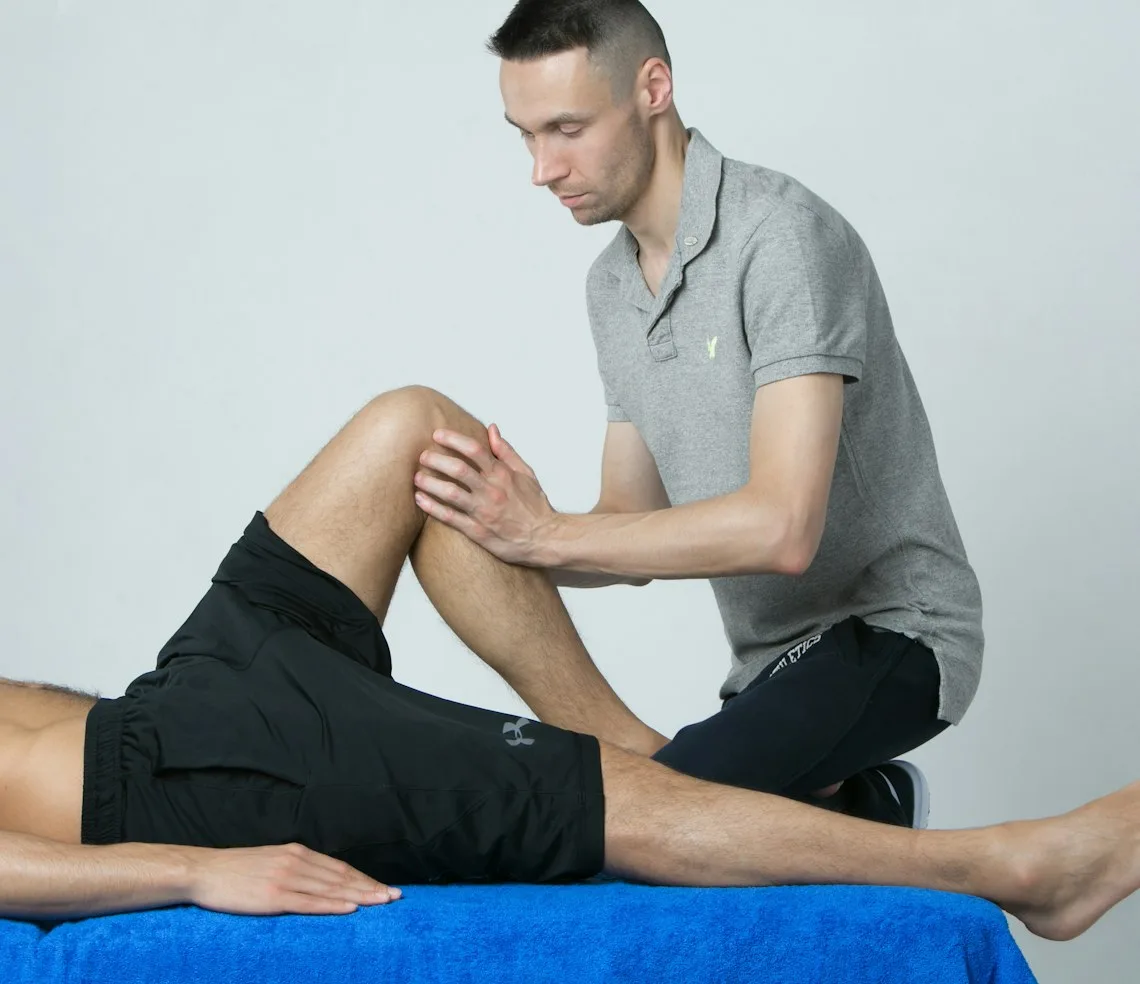
 What changes over a course
Bookly takes on booking, rescheduling and reminders, so the therapist works with the patient instead of the paper book and the phone.
 A course, not one visit
Rehabilitation runs to a programme: an assessment first, then ten or twelve sessions at two or three a week, ideally at the same hour with the same specialist. The visits go in ahead of time, so the patient can see their days to the end of the course instead of agreeing every session separately.
 Every visit of the course booked ahead in one diary
An assessment, a session and a treatment, each with its own length and price
Booking open to patients around the clock
Every visit of the course booked ahead in one diary
An assessment, a session and a treatment, each with its own length and price
Booking open to patients around the clock
 A week without clashes
An initial assessment runs longer than a session, there is one machine in the room, and two specialists work the floor at once. Each of them keeps a schedule of their own, so a patient is only offered the time a visit fits into completely, the turnaround and the note-writing included.
A schedule of its own for every specialist
A gap between visits built into the schedule
A reminder to the patient the day before
Progress between visits
Three days pass between sessions, and a dozen patients pass through your hands in them, so the detail does not stay in your head. The card shows the dates of earlier visits, which treatments were given, how many sessions of the course are done, and the notes you left last time.
History of a patient’s visits and treatments
Therapist notes on how the sessions are going
The form filled in before the first visit
 Everything a rehab clinic needs
Booking, the specialists’ hours, patient cards with visit history, the form before a first appointment and the consumables, all in one service instead of a paper book and three chats.

Booking page
Patients see the treatments, how long each runs and what it costs, and the hours every specialist has free, then book an initial assessment without calling the desk.

The clinic diary
Assessments, sessions and machine treatments in one calendar. You can see who is busy, when the gym is free and where the next visit of a course fits.

Patient card
Contacts, visit history, the sessions of the course already done and the therapist’s notes, all in one profile, open only to your team.

A form before the first visit
What is troubling them, when the injury or the operation happened, what they cannot do yet, who they have already seen: the short form lives on a page of its own, you send the patient its link, and the specialist reads the answers before they meet.

Consumables
Kinesiology tape, resistance bands, electrode gel, disposable couch covers. Bookly tells you what is running low before the cupboard is empty.

Money and bookings
See how much the treatments and each specialist brought in, how many bookings the period held and how that compares with the one before.
 Quick start
Setting it up takes an evening: the clinic page, the treatments with their lengths, the specialists’ hours, and a link you can hand to the doctors who refer patients to you.


Build the clinic page
Add the name, a photo of the gym, the address, the opening hours and your contacts. There is no separate website to build.

List the treatments and specialists
An initial assessment, a session with a physiotherapist, massage, a machine treatment: each with its own length, price and the people who give it.

Set the hours and the gaps
Say who works when, and leave time between visits for the turnaround and the notes, so patients are only offered the hours that are genuinely free.

Share the link
Put it on your Google listing, in the clinic profile and in your reply to the doctors who refer patients. Bookings land in the calendar straight away.
 The result in numbers
You put the sessions of a course into the diary in advance one by one, at hours that suit the patient. The therapist opens the card and sees what was done last time, so the programme continues instead of restarting.
Try for free

24/7
Patients book a visit at any hour

3 min
To add a treatment with its length

100%
Of reminders go out automatically

30+
Integrations, calendar and Telegram among them


(4.9/5)
500+ businesses already run on Bookly
Fewer Lost Leads.
More
Loyal Clients.
Attract clients, take bookings, automate communication, and track results — no complicated setup.

Ask it here. The answer appears under your question and lands in your inbox, and stays on the page for the next person looking for the same thing.
Claire
Awaiting an answer
Yes. Bookly has no repeating bookings, so you put the visits into the diary in advance one by one, on the days and hours you need and with the specialist you want, and a reminder goes out before each one.
No. Bookly handles booking, the schedule and contact history: visit dates, treatments, the form filled in before a first appointment and your working notes. Diagnoses, protocols and clinical reports stay wherever you keep them today.
You, and the colleagues you have given access to in your workspace. The answers are never shown on the public booking page, they are visible in your calendar and on the patient card.
The visit moves to a time that is free, the rest of the course stays where it is, and the patient gets a confirmation of the new hour. Nobody has to be rung round.
Yes. Every treatment carries its own length and price, so a 60-minute assessment and a 30-minute session take exactly as much of the diary as they run.
Yes, though by hand: Bookly takes no payments online. You enter the sum sent in advance in Finance as a Deposit operation, and Operations shows whose visits are already paid into. It is not required.
Yes. Create an account and set booking up with no card and no commitment.
Bookly is not only for physiotherapy and rehabilitation. Pick your own line of work: the same tools are there, arranged around different days.
Bookly is a Ukrainian online booking and CRM service for physiotherapy and rehabilitation centres: patients book themselves, the whole course goes into the diary ahead, and before each session the therapist sees what happened last time.
Rehabilitation rarely fits into a single visit. There is an assessment first, then a programme of ten or twelve sessions at two or three a week, and the thread between them has to hold. While that course is written out in a paper book, the front desk carries in its head which specialist still has Thursday free, and the phone rings at exactly the moment the therapist has their hands on a patient.
A booking page takes that back-and-forth away. Patients see the treatments, how long each runs and what it costs, and the hours every specialist has free, and they book the initial assessment themselves, late in the evening if that is when they decided. You then put the rest of the course into the diary ahead of time, one visit at a time: every treatment carries its own length, so a one-hour assessment and a half-hour session take exactly as much room as they need, with the turnaround for cleaning and notes left in between.
After that, the course has to be seen through. Reminders go out automatically before every visit, and when one session has to move, it moves to a free slot while the rest of the course stays where it is. If you work with money up front, the deposit goes into Finance as a Deposit operation, so what stands in the diary is a visit that is genuinely spoken for rather than an intention to come by sometime.
Before today’s session the therapist needs to know what happened at the last one. The patient card keeps the contacts, the dates of earlier visits, the treatments given, the form filled in before the first appointment and the working notes, all open only to your team. Bookly is not a medical system: diagnoses and treatment protocols stay wherever you keep them. Consumables such as tape, bands and electrode gel can be tracked in stock, so they do not run out in the middle of an appointment.




























Bookly team